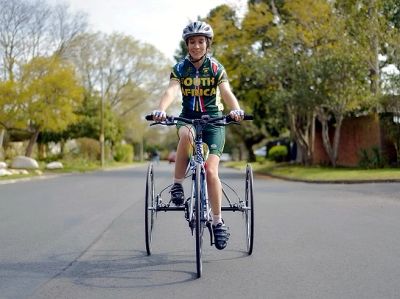
Inclusive cycling opportunities for athletes with physical and visual impairments.
Para Cycling is an inclusive and competitive cycling discipline for athletes with eligible physical or visual impairments. Governed internationally by the Union Cycliste Internationale (UCI), the sport is designed to ensure fair competition through a classification system that groups athletes according to how their impairment affects cycling performance. Whether your goal is recreation, fitness, competition or high-performance sport, Para Cycling offers opportunities to participate across a wide range of functional abilities. Riders can progress from local events through to national championships, World Championships and the Paralympic Games.
Road and Track Cycling
Para Cycling is contested across both Road and Track disciplines. Road cycling includes Road Races, Individual Time Trials and Handcycling Team Relays, while track cycling features events such as the Individual Pursuit, Sprint, Team Sprint, 500m or 1km Time Trial, and Tandem Sprint. Together, these events provide opportunities for athletes with a variety of strengths, interests and abilities.
Categories and Classification
To ensure fair competition, athletes are classified according to their functional abilities and compete in one of four categories:
- B (Tandem) – For blind and visually impaired athletes who compete on a tandem bicycle with a sighted pilot.
- C (Cycle) – For athletes who ride standard two-wheeled bicycles, including riders with limb impairments, amputations and other eligible physical impairments.
- H (Handcycle) – For athletes who compete using hand-powered cycles, typically due to lower-limb impairments or spinal cord injuries.
- T (Tricycle) – For athletes who require the additional stability of a three-wheeled cycle because of balance or coordination limitations.
Within these categories, athletes are assigned a sport class based on their functional profile. The numbers indicate how much a rider's impairment impacts their cycling function within that category.
Generally, the lower the number, the greater the impact of the impairment on cycling performance. Riders compete against others with similar functional abilities to ensure fair competition. Classification is conducted by trained classifiers and helps ensure that competition is fair and based on sporting performance rather than the nature of an athlete's impairment.
Equipment and Competition
Athletes compete using equipment specifically suited to their classification and must comply with Cycling South Africa and UCI regulations. Depending on the category, riders may compete on standard bicycles, tandems, handcycles or tricycles, with approved adaptations permitted where necessary. Safety remains a priority, and all equipment must meet the applicable competition requirements.
At its heart, Para Cycling is about inclusion, opportunity and achievement. Whether you are visually impaired, an amputee, living with paraplegia or tetraplegia, have a neurological impairment, or require additional stability to ride safely, there may be a category and classification suited to your abilities. Para Cycling provides an environment where athletes can challenge themselves, build confidence, develop their skills and experience the enjoyment of cycling, while competing on a fair and level playing field.